
Last Updated: November 1, 2026
Quick Summary
To clean sap from pruners, soak the blades in warm water for 10 to 15 minutes, then wipe the metal with a cloth or cotton ball soaked in 91% isopropyl rubbing alcohol. Scrub any dried-on residue along the blade with a nylon scourer or fine wire wool, working away from the cutting edge, then dry the tool straight away.
- Keep handles and spring above the waterline during the warm-water soak.
- Mix three parts alcohol to one part water if you prefer a diluted solution.
- Keep alcohol off plastic and rubber handles because it dries them out.
- Hold alcohol-soaked cotton against a hardened pivot pin for 30 seconds before twisting.
- Wipe the blade every 20 to 30 minutes of pruning to stop sap hardening.
Table of Contents
- What You'll Need Before You Start
- Step 1: Soak the Blades in Warm Water
- Step 2: Wipe Away Sap with Rubbing Alcohol
- Step 3: Scrub Dried-On Residue Off the Blade
- How to Clean Secateurs Around Joints and Handles
- How to Disinfect Pruning Shears After Sap Removal
- WD-40 for Cleaning Secateurs: Where It Helps and Where It Doesn't
- How to Prevent Sap Build-Up on Pruners
- Frequently Asked Questions
What You'll Need Before You Start
Sap is sticky, acidic and quick to harden. On pruners, it traps grit between the blades and speeds up rust. Knowing how to clean sap from pruners starts with the right kit, and getting clean sap off the blades is easier when most of it is already in your shed.
Here is what we recommend gathering before you begin:
- Warm water in a shallow bucket
- Rubbing alcohol, ideally 91% isopropyl
- A soft cloth and a few cotton balls
- A nylon scourer or fine wire wool for stubborn spots
- A small scrubbing brush for the joints
- A dry towel
- Penetrating oil or a water-displacing spray
Skip anything abrasive on the cutting edge. A metal blade scratches easily, and scratches hold sap.
If your pruners are past saving, our ARS VS-9XZ Professional Secateurs - Large are made in Japan with chrome plated blades and aluminium handles, and are suitable for all types of pruning and harvesting.

Step 1: Soak the Blades in Warm Water
Warm water softens sap better than cold. Fill a shallow bucket and sit the blades in it for 10 to 15 minutes. Keep the handles and spring above the waterline.
This warm-water soak does two things. It loosens the top layer of sticky residue, and it softens dried-on sap so it lifts instead of fighting you.
Do not leave pruners soaking overnight. Water creeps into the pivot and starts rust. Ten to fifteen minutes is plenty.
Step 2: Wipe Away Sap with Rubbing Alcohol
Rubbing alcohol dissolves sap fast. Wipe the metal blade with a cloth or cotton ball soaked in isopropyl alcohol. Most of the sticky residue comes away in one pass.
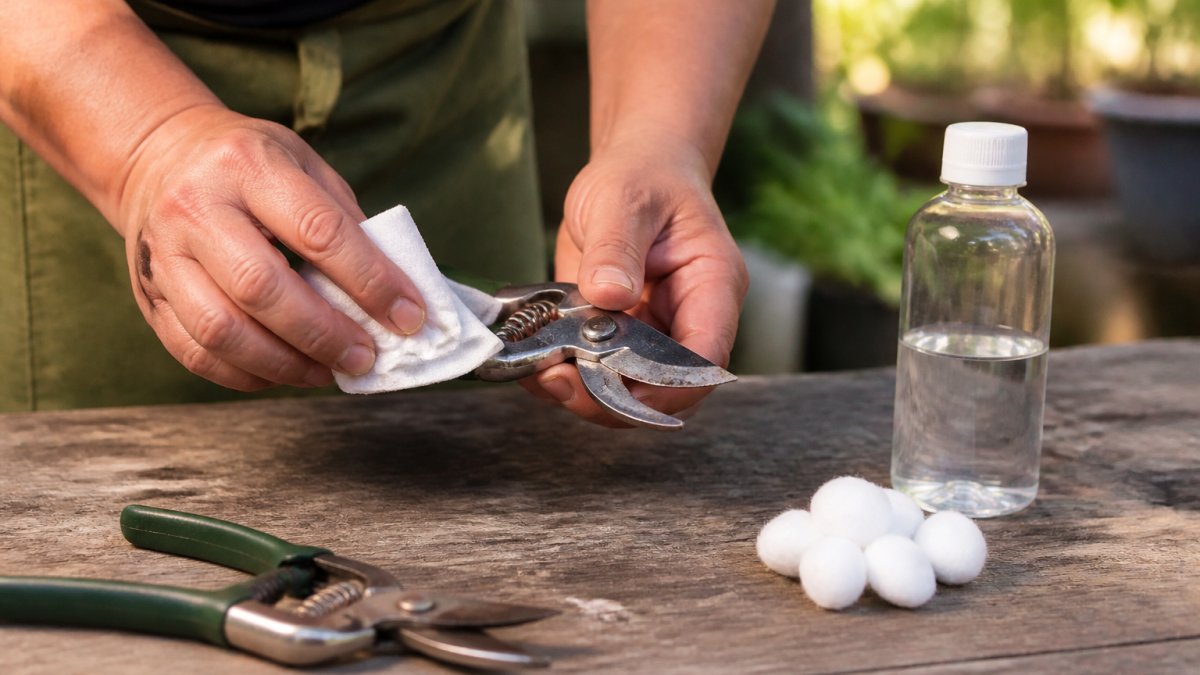
You can also dilute it. Deep Green Permaculture's guide to cleaning pruning tools suggests mixing three parts alcohol to one part water, though wiping with alcohol alone often does the job.
Watch out: keep alcohol off plastic and rubber handles. It dries them out over time.
Step 3: Scrub Dried-On Residue Off the Blade
Dried sap needs friction. Work along the blade with a nylon scourer, fine wire wool or a scrubbing brush. Scrub in one direction, away from the cutting edge.
For hard patches, apply a little cleaning solution and let it sit for a minute. Then rub again. Repeat until the metal is smooth.
A common mistake is scrubbing across the edge. That dulls it. Always scrub along the bevel.
Once the sap is gone, dry the blade straight away. Then check the edge. If it feels rough, our guide on how to sharpen professional garden shears walks through the next step.
How to Clean Secateurs Around Joints and Handles
Sap collects in the pivot, the spring and the handle grooves. These spots are where most pruner problems start, because sap traps grit against the pivot pin and holds moisture against the metal.
Open the secateurs and work in this order:
- Pivot pin. Fold a cotton ball soaked in rubbing alcohol around the pin and twist it back and forth. The alcohol dissolves fresh sap on contact; for hardened sap, hold the soaked cotton against the pin for 30 seconds before twisting.
- Spring. Run a small scrubbing brush along the coil, then wipe with an alcohol-damp cloth. Do not pull the spring off unless the manufacturer's instructions show how it refits, many springs are under tension and can fly loose.
- Handle grooves. Sap and grit pack into the moulded grooves. A nylon scourer or an old toothbrush reaches in without scratching. Wipe along the groove, not across it.
- Blade recess. With the blades open, wipe the flat face where the blade seats against the handle. Sap here stops the blades closing fully.
Do not flood the pivot with water. It pushes grit deeper and leaves moisture behind, which is the main cause of a stiff joint after cleaning.
Cleaner compatibility and cautions
Not every cleaner is safe on every pruner. Before you use a new product on the whole tool, test it on a hidden spot:
ARS VS-9XZ Professional Secateurs - Large →
- Rubbing alcohol is safe on bare metal but dries out plastic and rubber handles over time. Keep it off grips and seals.
- Warm soapy water is safe on most finishes but leaves residue in the pivot if not rinsed and dried.
- Penetrating oil and water-displacing sprays are safe on metal but can stain porous handles and leave a film that attracts grit.
- Wire wool is fine on the flat of the blade but will scratch coated or painted surfaces. Use nylon on anything coated.
If the handle is plastic, rubber or a composite, wipe with a damp cloth and mild detergent rather than solvent. Solvents can soften some plastics and lift printed markings.
Safe handling around blades
- Wear a cut-resistant glove on the hand holding the tool.
- Work with the blade edge facing away from your body and your free hand behind the blade.
- Never scrub toward the cutting edge; always scrub along the bevel, away from the edge.
- Dry the joint with a cloth, then leave the tool open to air for a few minutes before closing it.
If the blades feel loose or start crushing stems after cleaning, the joint may need attention. Our guide on why secateurs crush stems covers the diagnosis and fix.
How to Disinfect Pruning Shears After Sap Removal
Cleaning removes sap. Disinfecting kills pathogens. They are two different jobs, and pruning tools need both.
After the sap is gone and the blade is dry, wipe the cutting surfaces with fresh rubbing alcohol. Let it air dry before the next cut. This step matters most when moving between plants, especially sick ones.
Dirty blades spread plant disease from one shrub to the next. Read how clean cuts prevent plant disease to see why a sharp, disinfected blade matters. advice on clean cuts and plant disease explains why a sharp, clean cut heals faster.
Sanitise between plants when disease is present. A quick alcohol wipe is enough.
WD-40 for Cleaning Secateurs: Where It Helps and Where It Doesn't
WD-40 is a water-displacing spray, not a cleaner. It helps after cleaning, not during it.
Where it works:
- Driving moisture out of the pivot after washing
- Loosening a stiff joint
- A light coat on the metal to slow rust
Where it doesn't:
- Dissolving hardened sap (alcohol does that better)
- Replacing a proper disinfecting wipe
- Staying on the blade long term, because it wears off fast
Use it as a finishing step. Spray a little into the joint, work it in, then wipe off the excess. For long-term care, our guide on maintaining professional pruning secateurs covers lubrication and storage.
How to Prevent Sap Build-Up on Pruners
The best cure for sap buildup is a quick wipe during the job. Fresh sap is soft and comes off in seconds; once it hardens it bonds to the metal and takes a full scrub. That difference is the whole reason a mid-job wipe is worth the 20 seconds.
Carry a rag and a small bottle of alcohol in your kit. Wipe the blade every 20 to 30 minutes of pruning, and again before you put the tool away.
A simple end-of-session routine
- Wipe the blade with an alcohol-damp cloth while the sap is still fresh.
- Brush the pivot and spring with a dry brush to clear grit.
- Dry the tool fully, moisture left in the joint is what starts rust.
- Lubricate the pivot with a drop of penetrating oil, work it in, and wipe off the excess.
- Store dry, with the blades closed, in a shed or toolbox rather than on damp ground.
Why each step matters
- Wiping during the job stops sap building into a layer that traps grit against the blade edge.
- Brushing the pivot removes the grit that wears the joint and makes blades loose.
- Drying matters more than most people think: rust starts in the pivot, not on the blade face.
- Lubricating monthly keeps the joint smooth and pushes moisture out of the moving parts.
- Storing dry prevents the condensation that forms when a cold tool is brought into a warm shed.
Other habits that help:
- Clean tools at the end of every session, not every few weeks.
- Keep a spare pair ready so you are never tempted to skip cleaning.
- Oil the pivot monthly, and after any wash that involved water.
Professional-grade tools reward this routine. Our ARS VS-8XZ Professional Secateurs - Medium are $99.00, and the Felco 2 Secateurs are $123.00.
A quick routine keeps sap from hardening into a layer that traps grit and starts rust.
| Step | What to do | Why it matters |
|---|---|---|
| Wipe | Wipe blade with alcohol-damp cloth while sap is fresh | Stops sap building a grit-trapping layer |
| Brush | Brush pivot and spring with a dry brush | Removes grit that wears the joint |
| Dry | Dry the tool fully | Rust starts in the pivot, not the blade face |
| Lubricate | Add a drop of penetrating oil to the pivot | Keeps joint smooth and pushes out moisture |
| Store | Store dry, blades closed, in shed or toolbox | Prevents condensation on a cold tool |
Frequently Asked Questions
Will vinegar remove sap from pruners?
Vinegar can soften light sap residue, but it is not the most reliable option for sticky tree sap on pruner blades. Rubbing alcohol works faster because it breaks down the resin directly. If you do try vinegar, use white vinegar on a cloth, wipe the blade, then rinse and dry thoroughly, since leaving acid on steel encourages corrosion. For dried-on sap, warm water soaking followed by an alcohol wipe is the more dependable method.
Can you use WD-40 to clean secateurs?
Yes, WD-40 helps with sap removal and rust prevention, but use it as a finishing step rather than the main cleaner. Spray it on a cloth, wipe the blade and joint, then wipe off the excess so grit does not collect. Do not rely on it to dissolve heavy sap buildup, and never use it as a substitute for disinfecting between plants. A warm-water soak and rubbing alcohol wipe should come first.
How often should you clean pruners?
Wipe the blades during use whenever sap starts to feel tacky, and do a full clean at the end of each working day. If you are pruning species that bleed heavily, clean between plants to stop sap buildup affecting cut quality. Disinfect between plants when disease is a concern. A ten to fifteen minute warm-water soak weekly keeps joints and springs free of grime that stiffens the action.
What is the safest way to clean sap off pruner blades?
Use a cloth or cotton ball soaked in rubbing alcohol for light sap, and a nylon scourer for dried-on residue. Avoid wire wool on chrome plated blades because it dulls the finish. Dry fully, then apply a drop of penetrating oil at the pivot to keep the action smooth.
Sap buildup is easy to ignore until it costs you a blade. A ten-minute clean once a week keeps pruners cutting cleanly for years. At Toolpro, we stock professional secateurs, sharpeners and spare parts so your tools stay in service. Browse our range and get the right gear for cleaner cuts and healthier plants.
