
Last Updated: November 21, 2026
Quick Summary
A professional floristry kit is built around the stems you cut: a floral knife for soft stems, snips for light pruning, secateurs for woody stems and roses, plus wire cutters, florist tape, pot tape and a thorn stripper. Match each cutter to its material, then clean, sharpen and store tools in a leather pouch so they last.
- Use a pull cut with a floral knife, drawing the blade toward you at an angle, never pushing.
- Keep a dedicated wire cutter, because cutting wire with scissors makes them tear soft stems within a week.
- Florist tape binds stems and grips by stretching, while pot tape anchors foam and mechanics in containers.
- Wipe blades with an oiled cloth after every session, before sap sets, then sharpen with a fine ceramic sharpener.
- The Floristry Kit ARS at $180.00 bundles ARS VS8XZ secateurs, SE-45 snips and FL-18 scissors.
Table of Contents
- Start With the Cuts, Not the Catalogue
- Florist Knife Blade Types for Stem Cutting
- Florist Scissors vs Secateurs: Which Tool for Which Stem
- Snips, Wire Cutters and the Supporting Tools That Finish the Job
- How to Clean and Sharpen Florist Tools
- Your Florist Tool Kit Checklist and Kit Tiers
- Build Your Kit Around the Stems You Handle
- Frequently Asked Questions
Start With the Cuts, Not the Catalogue
Most florists build a kit by scrolling a supplier page and buying whatever looks professional. That is backwards. The essential tools for a professional floristry kit are decided by the stems you cut, not by what sits on a shelf.
At Toolpro, we supply cutting tools to florists, growers and nurseries, and the pattern is consistent: the florists who get years out of their kit buy for the work, not the wishlist. A clean cut matters more than most people realise, because a crushed stem cannot take up water properly. If you want the full explanation of why, our guide on how clean cuts prevent plant disease covers the mechanics.
Below, we break down each tool by the job it does, then show you how to clean, sharpen and tier your kit so it lasts.
Florist Knife Blade Types for Stem Cutting
A floral knife is the fastest tool for soft stems, and the blade type decides how well it works. Three profiles cover almost every florist's needs:
- Straight paring blade: the standard florist knife. A 75mm hardened stainless steel blade, like the Tramontina 75mm Knife at $10.00, handles pruning, harvesting and propagation with a single pull cut.
- Curved blade: rolls through bunched stems in one motion. Better for volume work, harder to sharpen accurately.
- Serrated blade: grips slippery or woody stems, but tears soft tissue. Keep it for tough material only.
The pull cut is the technique that matters. Draw the blade toward you at an angle, never push. A common mistake is cutting downward onto a bench, which crushes the stem and dulls the edge fast.
Florist Scissors vs Secateurs: Which Tool for Which Stem
The rule is simple: scissors for soft green stems, secateurs for anything woody. Florist scissors give you control on carnations, gerberas and soft foliage. Secateurs give you use on roses, branches and thick stems that would ruin a scissor edge.
| Tool | Best for | Price |
|---|---|---|
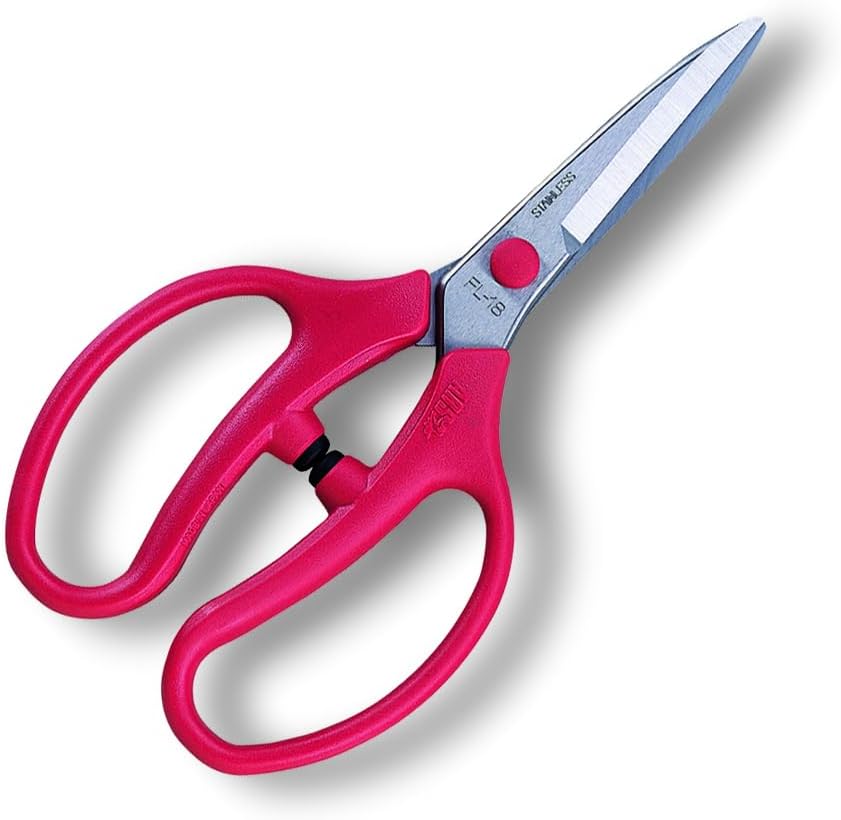
| Florist scissors | Soft stems, ribbon, fine trimming | $55.00 |
| Florist scissors | Clean cuts, comfort grip | $45.00 |
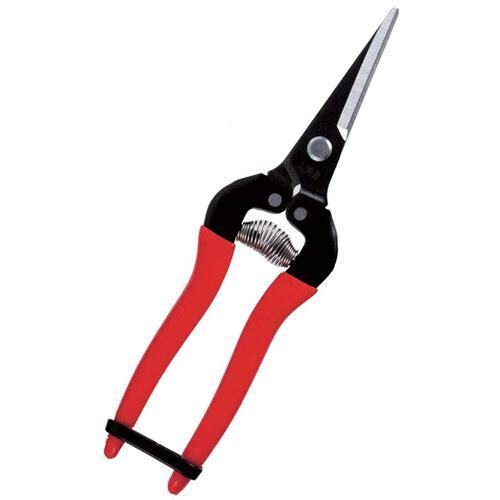
| Snips | Light pruning, harvesting, propagation | $21.00 |
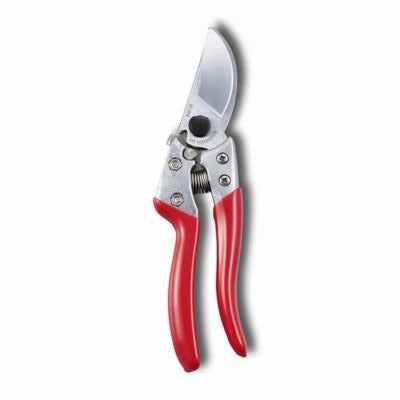
| Secateurs | Woody stems, roses, branches | $123.00 |
| Cut-and-hold secateurs | One-handed rose harvesting | $152.00 |
| Cut-and-hold secateurs | Flower harvesting | $110.00 |
For woody stems, a professional secateur like the Ars Professional Secateurs Medium With Roll Handle is the workhorse. If you harvest roses by the armful, cut-and-hold models let you cut and carry in one motion.
Snips, Wire Cutters and the Supporting Tools That Finish the Job
Cutting stems is half the kit. The other half secures and finishes the arrangement, and this is where most florists either buy the wrong tool or buy the right tool and use it for the wrong job.
Wire cutters. Floral wire is hardened steel, and stem scissors are not. Cutting wire with a scissor or snip nicks the edge and rolls the bevel, which is why a pair of florist scissors that has cut wire will start tearing soft stems within a week. A dedicated wire cutter with a hardened jaw and a short, powerful bite handles 18- to 24-gauge wire cleanly. Keep it in a separate pocket of your pouch so you never reach for it by mistake.
Florist tape and pot tape. These are not interchangeable. Florist tape is a stretchable, self-sealing tape used to bind wire and tape stems for corsages and buttonholes; it grips by stretching, so you wrap under tension. Pot tape is a stronger, waterproof tape used to anchor foam and mechanics inside a container. Using pot tape on a stem leaves a stiff, visible band; using florist tape to hold foam fails once the foam takes on water.
Thorn strippers. A rose stripper is a small, curved plastic or metal tool that grips the stem and pulls thorns and lower leaves in one motion. It saves your hands and, more importantly, saves time on volume rose work. A leather thumb guard protects the thumb that holds the stem while you strip or wire.
Material compatibility. The single most useful rule in this part of the kit is that cutters are matched to stem thickness and material, not to the name on the handle. Snips suit stems up to roughly pencil thickness; secateurs suit woody stems and branches; a floral knife suits soft stems where a pull cut is faster than a squeeze. A tool used outside its material range either crushes the stem or damages the edge.
How to Clean and Sharpen Florist Tools
Sap is the enemy. It builds on the blade, traps grit and drags the edge dull within days. Rinsing at the end of the day is not enough, because sap hardens overnight.
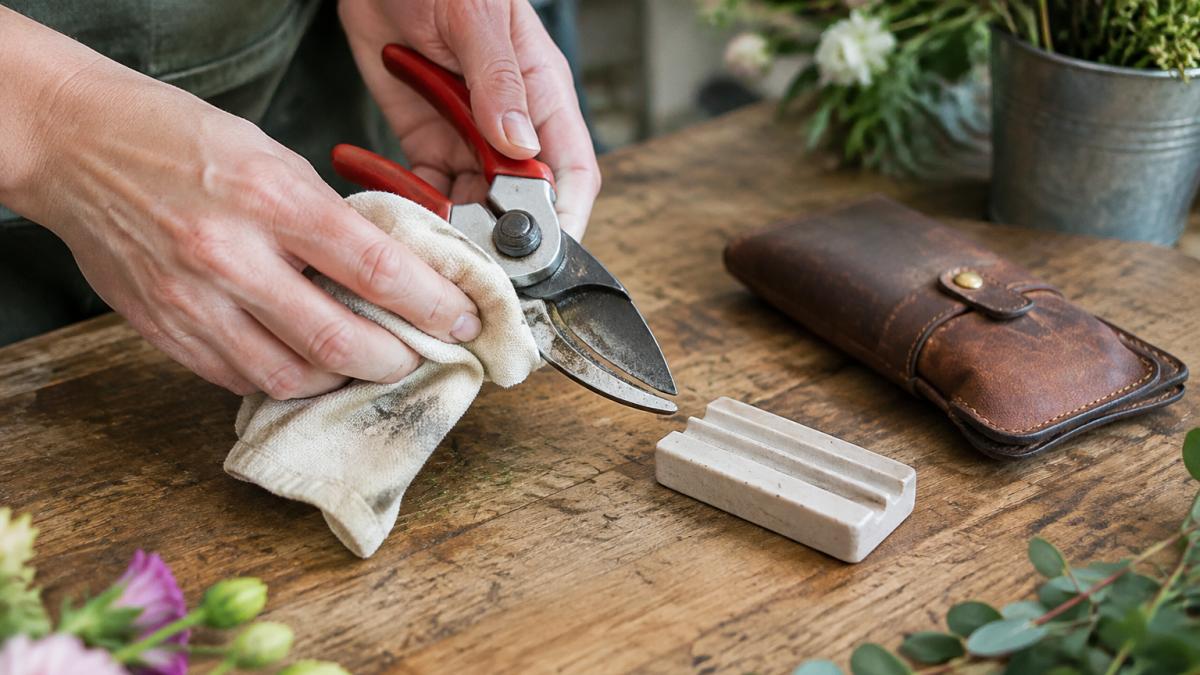
Our step-by-step method:
- Wipe the blade with an oiled cloth after every session, before sap sets.
- Scrub the pivot and spring with a small brush to clear grit.
- Dry completely, then apply a light oil to the pivot.
- Sharpen with a fine ceramic sharpener, like the Ceramic Sharpener at $15.00, holding the original bevel angle.
- Store in a leather pouch, not loose in a bucket.
For a full walkthrough, see our guide on how to sharpen a floral knife at home, and for stubborn buildup, our steps to clean sap off pruners properly go deeper.
Your Florist Tool Kit Checklist and Kit Tiers
A floristry kit is the complete set of cutting, securing and protective tools a working florist needs to process stems and build arrangements efficiently. Most kit lists stop at naming the tools. The more useful approach is to build the kit around the tasks you actually do, then tier it so you buy once and add as your work grows.
Build by task, not by catalogue. Map the kit to four jobs:
- Processing stems: a floral knife for soft stems, snips for light pruning and harvesting, secateurs for woody stems and roses, a thorn stripper for roses, and gloves for handling.
- Wiring and securing: wire cutters, floral wire in two or three gauges, florist tape, pot tape, and pins or wristlets.
- Arranging and mechanics: foam, chicken wire, tape, and a container-appropriate anchor. These are consumables, not tools, and they run out faster than anything else in the kit.
- Finishing and handling: ribbon scissors kept separate from stem scissors, a sharpener, and a pouch or roll for storage.
Ergonomics and hand protection. Grip, weight and hand size matter more than most kit lists admit.
Consumables versus tools. Reusable tools are the knife, snips, secateurs, scissors, wire cutters, sharpener and pouch. Consumables are wire, florist tape, pot tape, parafilm, pins and foam. Budget for consumables as an ongoing cost, not a one-off purchase, and restock wire and tape before a busy event week rather than during it.
Beginner tier: a floral knife, snips and gloves. The ARS 300L Snips at $21.00 and the Tramontina 75mm Knife at $10.00 are good starting points for soft-stem work.
Professional tier: add a quality secateur, florist scissors, a sharpener and a pouch. The ARS FL18-BP Florist Scissors at $55.00 and the ARS Leather Pouch at $39.00 make a solid base.
Complete kit: the Floristry Kit ARS at $180.00 bundles ARS VS8XZ secateurs, SE-45 snips and FL-18 scissors in one purchase, which is the fastest route to a matched professional set.
Organisation and portability. A leather pouch keeps cutting tools protected and makes an event-day pack easier to organise.
Build Your Kit Around the Stems You Handle
The kit that lasts is the one matched to your actual work. A wedding florist cutting soft stems all day needs different tools from a nursery handling woody propagation. Buy for the stems in front of you, maintain the edges properly, and the kit pays for itself in cleaner cuts and fewer replacements.
If your current tools are slowing you down, it is usually the edge, not the tool. Toolpro supplies professional-grade secateurs, snips, scissors and sharpeners, plus the spare parts and sharpeners that keep them cutting for years. Get started with Toolpro and build a floristry kit that works as hard as you do.
Frequently Asked Questions
What tools does a professional florist need?
A working floristry kit covers cutting and securing. That means a pair of secateurs for woody stems, florist scissors or snips for soft stems and ribbon, and a sharp knife for clean stem cuts. A [leather pouch](https://www.toolpro.info/products/ars-leather-pouch) and a [Ceramic Sharpener](https://www.toolpro.info/products/ceramic-sharpener) help keep the cutting tools in good condition.
What is the difference between florist scissors and secateurs?
Florist scissors such as the [ARS FL18-BP](https://www.toolpro.info/products/ars-florist-scissors-1) are suited to delicate work. Secateurs like the [Felco 2](https://www.toolpro.info/products/felco-2-secateurs) are suited to woody stems and branches.
Which knife is best for cutting flower stems?
The [Tramontina 75mm Knife](https://www.toolpro.info/products/tramontina-75mm-knife) has a hardened stainless steel blade suited to pruning, harvesting and propagation.
How should floristry tools be cleaned and sharpened?
Sharpen with a [fine ceramic sharpener](https://www.toolpro.info/products/ceramic-sharpener) to maintain a sharp cutting edge.
