
Last Updated: October 26, 2026
Quick Summary
Flower stems turn brown when bacteria, air, or crushed tissue blocks the stem's water channels, preventing hydration. This browning is almost always preventable by using sharp tools to make clean cuts and placing stems in water immediately after cutting.
- Use sharp tools to make clean cuts instead of crushing stem tissue, which browns within hours.
- Cut at a 45-degree angle and remove the lower 2-3 centimetres plus any leaves below the waterline.
- Place cut stems in water immediately to prevent oxidation and browning of exposed tissue.
- Change water every two to three days and trim 2-3 centimetres off the stem base each time.
- If browning has started, cut off at least 5 centimetres of the damaged section and rehydrate in fresh water.
Table of Contents
- Why Your Flower Stems Turn Brown After Cutting
- How to Cut Flower Stems Properly to Prevent Browning
- Tools for Cutting Flower Stems That Minimise Damage
- How Often to Change Water for Cut Flowers
- How to Revive Cut Flowers with Brown Stems
- Keeping Your Cutting Tools in Top Condition
- Selecting the Right Floristry Scissors for Your Needs
- Frequently Asked Questions
Why Your Flower Stems Turn Brown After Cutting
Brown stems on cut flowers signal that something's gone wrong in the first few hours after cutting. Understanding why stems brown helps you fix it before it ruins your arrangements.
Flower stems turn brown for a few key reasons. The most common is that bacteria, air, or crushed tissue blocks the stem's water channels. When water can't travel up the stem, the flower can't hydrate. Browning spreads quickly once it starts.
The good news: browning is almost always preventable. Most of it comes down to how you cut and what happens in the first few minutes after cutting.
How to Cut Flower Stems Properly to Prevent Browning
The way you cut matters more than most people realize. A clean cut lets water flow freely. A crushed or torn cut blocks it.
Use sharp tools. Dull blades crush stem tissue instead of slicing through it. Crushed tissue browns fast and clogs the water channels. Sharp tools make a clean cut that stays open.
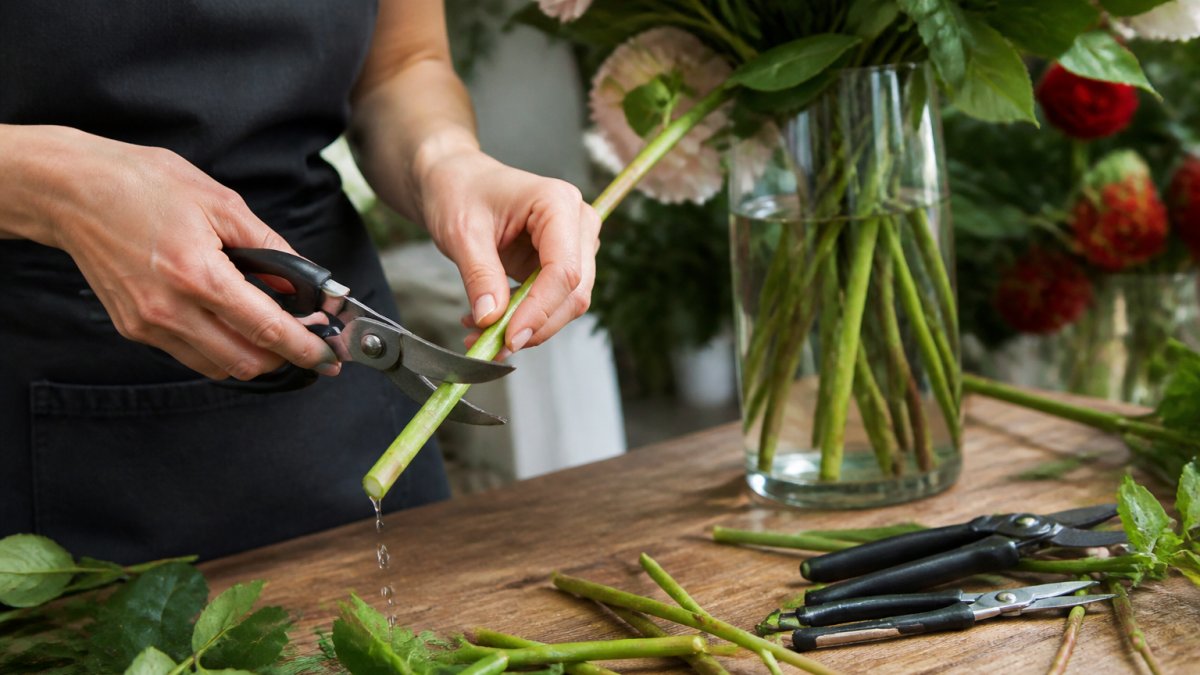
Cut at a 45-degree angle, not straight across. An angled cut gives the stem more surface area to absorb water. It also prevents the stem from sitting flat on the vase bottom, which blocks water uptake.
Cut about 2-3 centimetres from the base. Remove the lower leaves too. Leaves below the waterline rot and introduce bacteria into the water.
The role of sharp tools in clean cuts
Sharp tools prevent browning by making clean cuts instead of crushing the stem. When you use dull scissors or blades, the stem tissue tears and splinters. Those damaged cells brown within hours.
A clean cut from a sharp blade heals quickly. The stem's water channels stay open. Learn how to sharpen professional garden shears to keep your tools in top condition. Understanding how clean cuts prevent plant disease helps you see why this matters beyond just appearance.
Cut immediately before placing stems in water. Don't let cut stems sit in air. The exposed tissue oxidizes and browns. The longer the wait, the more browning happens.
Cutting angle and technique
A 45-degree angle works because it maximizes the surface area touching water. A flat cut (90 degrees) lets the stem sit flush against the vase bottom. That blocks water absorption.
Use a smooth, single motion when cutting. Sawing back and forth crushes tissue. One clean slice is what you want.
Never use knives or scissors meant for other jobs. Kitchen scissors and general-purpose tools leave rough edges. Professional floristry scissors are designed to make clean cuts without crushing.
Tools for Cutting Flower Stems That Minimise Damage
The right tool makes the difference between stems that last and stems that brown within days. Professional-grade floristry scissors are worth the investment because they cut cleanly every time.
We recommend three options depending on your needs and budget:
For fine floristry work and delicate flowers, the Chikamasa Floristry Scissors - Small at $30.00 are lightweight and precise. They're made in Japan and work well for detailed arrangements.

For regular professional use, the Sakagen Professional Florist Scissors at $45.00 offer durability and comfort. These are built to handle daily cutting without fatigue.

For high-volume florists and growers, the ARS FP17 Florist Scissors at $65.00 are the premium choice. They're engineered for precision and longevity in demanding environments.

Each of these tools cuts cleanly without crushing stems. That means less browning and longer-lasting arrangements.
| Tool | Price | Best For | Blade Length |
|---|---|---|---|
| Chikamasa Small | $30.00 | Fine, delicate work | 155mm |
| Sakagen Professional | $45.00 | Daily professional use | 185mm |
| ARS FP17 | $65.00 | High-volume cutting | 170mm |
How Often to Change Water for Cut Flowers
Fresh water slows browning by removing bacteria and debris. Change the water every two to three days.
Chikamasa Floristry Scissors - Small →
When you change water, trim 2-3 centimetres off the stem base again. This opens up new water channels. Old cut surfaces may have started to seal or brown.
Use cool, clean water (Cut flowers: cutting and conditioning). Warm water encourages bacterial growth. Tap water is fine, though some florists add flower food to provide nutrients and lower pH.
If stems are browning quickly, change the water daily for the first few days. This removes bacteria before it spreads up the stem.
How to Revive Cut Flowers with Brown Stems
If browning has already started, you can sometimes save the arrangement. Cut off the brown section with a sharp blade. Remove at least 5 centimetres to get past all the damaged tissue.
Place the stems immediately in fresh, cool water. Let them sit for a few hours before arranging. This gives them time to rehydrate.
Brown stems that have dried out may not recover. If the browning goes more than halfway up the stem, the flower usually won't revive. Prevention is always easier than revival.
Keeping Your Cutting Tools in Top Condition
Dull tools cause browning. Keeping your tools sharp prevents it.
Clean your tools after each use. Wipe blades with a dry cloth to remove sap and plant material. Sap buildup hardens and dulls the blades.
Sharpen your tools regularly. How often depends on use. Daily cutters should sharpen every week or two. Casual users can sharpen monthly.
Store tools in a dry place. Moisture causes rust, which damages the blades. A tool roll or box works well.
Oil the pivot point occasionally to keep blades moving smoothly. Stiff blades are harder to control and more likely to crush stems.
Selecting the Right Floristry Scissors for Your Needs
The best scissors for your work depend on what you're cutting and how often. Professional florists need something different than home gardeners.
Consider blade length. Longer blades (180mm+) cut thicker stems. Shorter blades (155mm) give more control on delicate flowers.
Weight matters if you're cutting for hours. Lightweight tools reduce hand fatigue. The Chikamasa Floristry Scissors - Small are ideal if your hands get tired.
Comfort matters too. Scissors with padded handles reduce strain. Look for tools with smooth, rounded handles that fit your hand size.
If you work with delicate orchids and general garden maintenance, you might need two sets. Delicate work needs precision tools. General maintenance can use tougher, heavier-duty scissors.
The investment in quality tools pays off quickly. Sharp, well-designed scissors cut cleanly, prevent browning, and last for years. Cheap tools dull fast and crush stems, leading to the browning problem you're trying to avoid.
Frequently Asked Questions
Why do flower stems turn brown after cutting?
Flower stems turn brown when bacteria, air pockets, or crushed tissue block the stem's water channels, preventing water uptake. This can happen immediately after cutting if the blade is dull, or develop over time if the vase water contains bacteria or debris. Brown stems also indicate the flower is struggling to draw moisture, which accelerates wilting. Using sharp, clean cutting tools and changing the water regularly slows this process significantly.
How do I prevent brown stems when cutting flowers?
Cut stems at a 45-degree angle using sharp floristry scissors to create a larger surface area for water absorption and minimise crushed tissue. Remove the bottom 2-5 centimetres of stem before placing flowers in fresh, clean water. Change the water every two days and re-cut the stems at the same angle each time. Professional-grade scissors like the [Sakagen Professional Florist Scissors](page:2) ($45.00) or [ARS FP17](page:3) ($65.00) are designed for clean cuts.
Can I revive flowers that already have brown stems?
Yes. Re-cut the stem at a 45-degree angle to remove the brown section and expose fresh tissue. Place the flowers immediately in fresh, room-temperature water with flower food if available. Trim 2-5 centimetres from the base and remove any leaves below the waterline. Brown stems that have already hardened may not fully recover, but fresh cuts often restore water uptake within a few hours, extending the arrangement's life by several days.
How often should I change water for cut flowers to prevent browning?
Change the water every two days, or daily if the water becomes cloudy or discoloured. Each time you change the water, re-cut the stem at a 45-degree angle to remove blockages and create a fresh water-absorbing surface. Clean the vase thoroughly to remove bacteria and debris that accelerate browning. This routine is especially important in warm conditions, where bacterial growth speeds up and brown stems develop faster.
Brown stems don't have to be part of your cutting routine. The right technique and sharp tools make the difference. Start with clean cuts at the right angle, change water regularly, and keep your tools sharp. These three habits prevent most browning before it starts. Toolpro's professional-grade floristry scissors are designed to make that clean cut every time, so your arrangements stay fresh longer.
