
Quick Summary
Professional pruning equipment for vineyards is built around repetitive use, so buyers should prioritise blade durability, handle comfort and serviceability over garden-grade convenience. Match each tool to the task and cane size, and plan powered or mechanised options as a system alongside hand tools.
- Vines are pruned every dormant season across hectares, so each cut matters and tools face heavy repetition.
- Bypass blades suit live vine wood, while anvil designs handle dead or tougher wood with less blade strain.
- Powered shears need chargers, spare batteries and a sign-out system to work reliably across a crew.
- Pre-pruners work best on mature, uniform blocks with compatible training systems, not on young or irregular vines.
- Clean sap from blades at the end of each day, since dried sap slows cutting and accelerates wear.
Table of Contents
- Hand Pruners and Secateurs for Vineyard Work
- Electric Pruning Shears for Vineyards
- Loppers, Saws and Tools for Thicker Wood
- Vineyard Pre-Pruner Machines and Mechanised Pre-Pruning
- Matching Tools to Vine Size, Pruning Task and Season
- Maintenance, Sharpening and Spare Parts for Pruning Tools
- Choosing Your Vineyard Pruning Kit Next
- Frequently Asked Questions
How Vineyard Pruning Equipment Differs From Garden Tools
Vineyard pruning is a different job from tidying a backyard shrub. Vines are pruned every dormant season across hectares, and each cut affects next year's fruit wood.
The practical differences come down to blade geometry, handle design, cutting capacity and serviceability. Repetitive cuts on dormant wood mean weight and balance matter more than for occasional garden use.
Mechanised pruning has changed the picture too.
Last Updated: November 14, 2026
Hand Pruners and Secateurs for Vineyard Work
For most vineyard crews, the hand pruner is the tool used for the longest hours, so it earns the closest scrutiny.
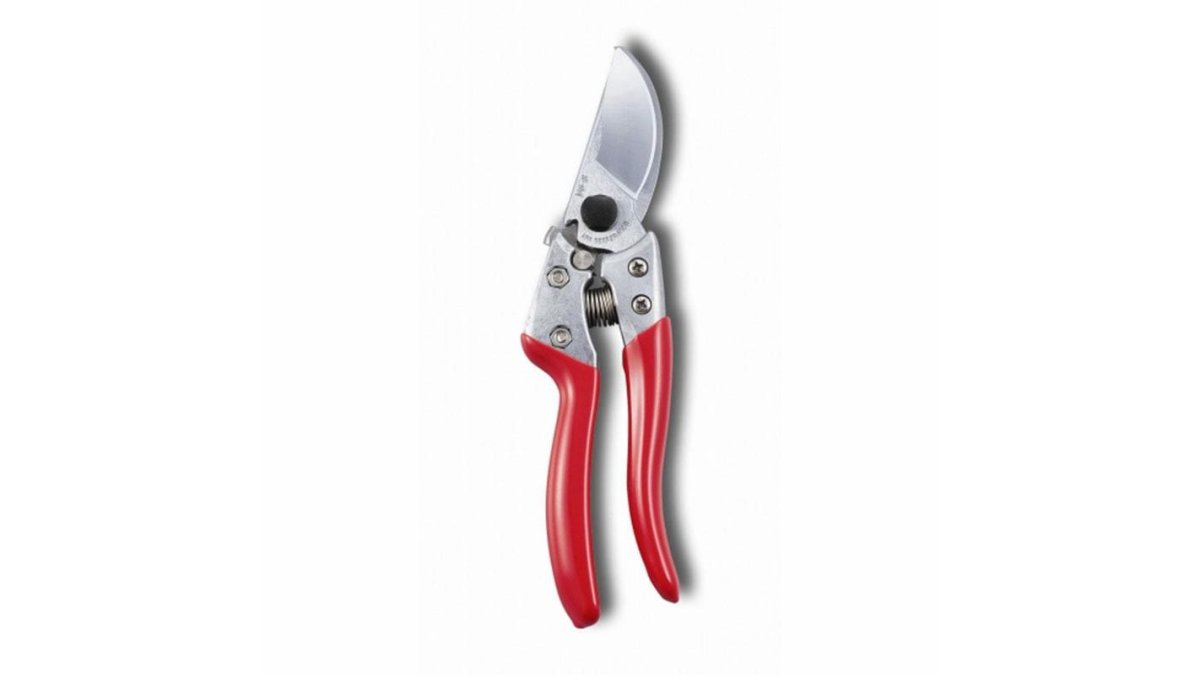
Length matters as much as blade quality. The ARS VS-8XZ Professional Secateurs - Medium, at $99.00 AUD, suits workers with smaller hands or lighter cane work.
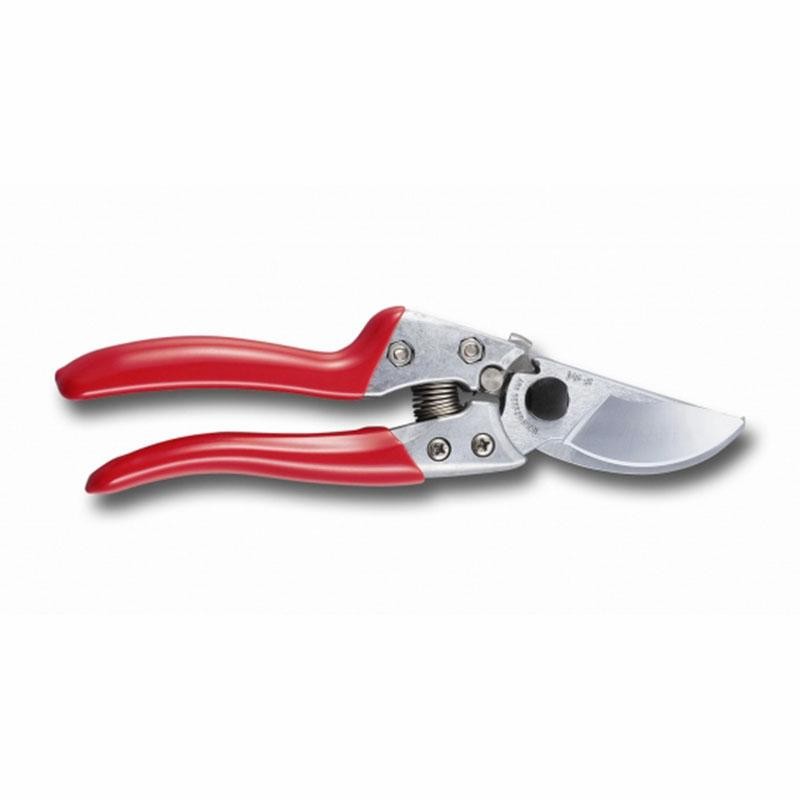
Hand fatigue is the reason many crews upgrade.
For a closer look at how the two main cutting styles compare, see our guide to anvil vs bypass pruners. If repetitive strain is your main concern, our review of professional secateurs for hand fatigue covers models built with long days in mind.
Bypass Versus Anvil Blade Designs
Bypass secateurs use two curved blades that pass each other like scissors, giving a clean cut that suits green and live wood. Anvil designs close a single blade onto a flat surface, which can crush the cane slightly but handles dead or tougher wood with less strain on the blade. Most vineyard buyers standardise on bypass for live vine work and keep an anvil model for deadwood, because mixing the two tasks on one blade wears it unevenly.
Electric Pruning Shears for Vineyards
Battery-powered pruning shears are the fastest-growing category in professional vineyard kits because they cut the physical load of thousands of repetitive cuts per shift. The trade-off is that a powered shear turns a personal tool into a small fleet problem: batteries, chargers, blade spares and safe operation all have to be managed across a crew.
What Actually Determines Runtime
Manufacturers quote runtime in hours, but vineyard reality is measured in cuts and vine count. A shear that runs six hours on light summer trimming may manage far fewer cuts in dense dormant cane.
Charging and Battery Logistics for a Crew
Charging is the part buyers underestimate. A crew of six running powered shears through a dormant season needs a charging plan that does not depend on a single power point in a shed. Common patterns include:
- A bank of chargers set up at the equipment shed overnight, with batteries numbered and rotated so no unit is over-cycled.
- Vehicle-mounted inverters or portable power stations for remote blocks, so batteries can be swapped mid-shift without returning to base.
- A simple sign-out system so batteries and shears are accounted for at the end of each day.
Battery chemistry matters too. Lithium-ion packs hold charge better in cold dormant-season mornings than older chemistries, but cold reduces usable capacity, so batteries should be stored indoors overnight rather than in a cold vehicle.
Blade, Spare-Part and Service Considerations
Powered shears wear differently from manual secateurs. The blade still needs sharpening, but the motor, trigger and battery contacts add failure points. Before standardising on a model, confirm that replacement blades, battery packs and chargers are stocked locally, because a shear waiting weeks for a part is a worker standing idle. Ask the supplier for expected blade life in cuts and replacement cost, then compare that against the labour cost of the crew member using it.
Safety and Training for Powered Pruning
Powered shears are fast and quiet enough that it is easy to forget the blade is moving. A practical safety routine for a vineyard crew includes:
- A pre-season briefing on trigger discipline, keeping the non-cutting hand clear of the blade path, and never carrying a shear with a finger on the trigger.
- Cut-resistant gloves rated for powered cutting tools, not just garden gloves.
- A rule that batteries are removed before any blade change, cleaning or clearing of jammed cane.
Training should be documented, particularly where workers are new to powered tools or where the operation brings in seasonal crews. A short practical demonstration on a real row is more effective than a manual, and it lets a supervisor catch unsafe habits before they spread.
Where Powered Shears Fit Alongside Hand Tools
Powered shears suit the bulk of dormant cane cutting and heavier wood where hand fatigue would otherwise slow a crew. For a lightweight professional hedge shear model, see the Ars Professional Hedge Shears Light Weight.
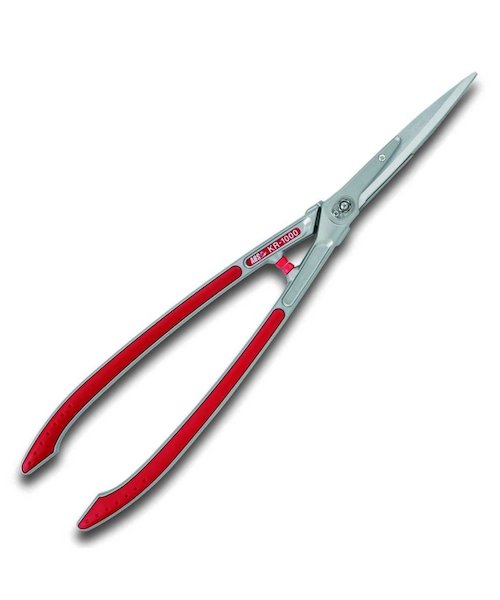
For buyers comparing manual and powered options, our review of professional secateurs for hand fatigue is a useful baseline for what a good manual tool should feel like before you add a battery to the equation.
Loppers, Saws and Tools for Thicker Wood
Thicker canes and older trunk wood need loppers or saws. Just as matching lopper capacity to cane diameter helps avoid poor cuts, choosing a spray drone calls for weighing the vineyard’s needs against the equipment’s capabilities.
For buyers wanting guidance on loppers for thicker canes, our guide to choosing pruning loppers walks through the main selection criteria, and our piece on durable pruning saws for fruit trees covers blade options for larger branches.
Vineyard Pre-Pruner Machines and Mechanised Pre-Pruning
Mechanical pre-pruning is the highest-leverage equipment decision in a commercial vineyard, and it is also the one most often justified with borrowed numbers. Savings depend on the vine training system, row layout, machine setup and how the hand-pruning crew is organised afterwards. A buyer should understand the mechanism, layout requirements and cost structure well enough to test the claim on their own block.
How Pre-Pruning Actually Works
A pre-pruner does not make pruning decisions. It removes the bulk of last season's growth so skilled workers can reach the fruiting wire and make the detailed cuts that determine next year's crop. Tractor-mounted units typically use rotating cutting heads, flails or reciprocating blades to trim the canopy and cane mass back to a rough profile.
The productivity gain comes from two places: the machine removes material that would otherwise be cut by hand, and it opens up the vine so the hand crew can see and reach the wood faster. The second effect is often larger than the first, which is why pre-pruning can change the economics of a block even when the machine itself is not dramatically faster than a hand crew.
Layout and Training-System Requirements
Pre-pruning is not a universal fit. The machine needs a trellis and row layout it can work within, and the vine training system has to present the wood in a way the cutting head can reach without damaging the cordon or trunk. Common requirements include:
- Consistent row spacing and trellis height, so the cutting head runs at a predictable position.
- A training system that keeps the fruiting wood within the machine's working envelope, typically a sprawl or minimal-pruning system rather than a tightly structured spur-pruned canopy.
- End-of-row turning space for the tractor, and rows long enough that turning time does not eat the savings.
A common pattern is that pre-pruning works best on mature, uniform blocks with a compatible training system, and least well on young vines, steep or irregular blocks, and tightly structured canopies where the machine cannot reach the wood without risk of damage.
The Cost Structure Buyers Should Model
Purchase price is only one line. A realistic model for a pre-pruner includes:
- Machine purchase or lease cost, plus the tractor it mounts to if that is not already owned.
- Fuel and operator time for the machine pass.
- Maintenance and blade or cutting-head wear, which is significant because the machine cuts a lot of wood.
The useful metric is cost per vine or cost per hectare for the whole pruning operation, not the machine's speed in isolation. A pre-pruner that is 20 percent faster than hand pruning but requires an extra tractor pass, an operator and a full hand crew afterwards may not reduce total cost at all. Conversely, a machine that is only modestly faster but lets a smaller hand crew finish the block can be clearly worthwhile.
Running a Trial Before You Commit
A practical trial runs the machine on a representative block and compares it against a hand-pruned control block of similar size and vine type. Record the machine pass time, the hand-pruning hours per hectare afterwards, the number of vines requiring remedial cuts, and any damage to cordons or trunks. Run it across a full season if possible, because the effect on next year's fruit wood and labour planning is where the real value shows up.
Where Pre-Pruning Fits in the Kit
Pre-pruning sits alongside hand tools rather than replacing them. The hand crew still needs sharp bypass secateurs, loppers for thicker wood and a saw for the largest cuts, and the machine pass changes the mix of work rather than removing it.
For the hand-tool side of the operation, our guide to choosing pruning loppers and our piece on durable pruning saws for fruit trees cover the tools that pick up where the machine leaves off.
Matching Tools to Vine Size, Pruning Task and Season
Choose tools by the task first. Winter pruning of dormant canes calls for sharp bypass secateurs and loppers for the heavier wood. Summer trimming is lighter work, and a smaller, lighter secateur reduces fatigue over long rows.
Vine size also changes the answer.
The article ties tool choice to the task, vine size and season, which can be summarised as follows.
| Task or vine condition | Suggested tool | Key consideration |
|---|---|---|
| Winter pruning of dormant canes | Sharp bypass secateurs and loppers | Heavier wood needs loppers |
| Summer trimming | Smaller, lighter secateur | Reduces fatigue over long rows |
| Largest cane cut most often | Blade sized to that cane | Add one size up for occasional heavier wood |
| Small vineyard with short rows | One high-quality secateur and one lopper | Keeps the kit simple |
| Commercial operation | Standardised tools across the crew | Simplifies spare blades and sharpening |
Maintenance, Sharpening and Spare Parts for Pruning Tools
Blade maintenance is where most vineyard tools lose their value. Clean sap from blades at the end of each day, since dried sap slows the cut and accelerates wear. Sharpen regularly rather than waiting for the blade to pull at the cane, and keep replacement blades and pivot parts on hand so a damaged tool does not idle a crew.
Toolpro supplies sharpeners and spare parts alongside its pruning range.
Choosing Your Vineyard Pruning Kit Next
A sensible starting kit for a vineyard is one primary hand pruner for the crew's main task, a second size for smaller work, one lopper for thicker wood, and a saw for the largest cuts. Add a sharpener and a set of spare blades before the season starts.
Start with the tools your crew uses most, then build outward as your vineyard's needs become clearer.
Frequently Asked Questions
What tools do professionals use to prune grapevines?
Most vineyard crews work with a combination of hand pruners (secateurs), loppers for thicker wood, and pruning saws for older canes. Secateurs handle the bulk of final cut pruning on the vine, while loppers and saws are used where canes or trunk wood are too thick for a hand tool. Larger operations may add powered shears or a tractor-mounted pre-pruner to remove bulk growth before crews finish by hand. Toolpro supplies ARS and Leyat Swiss secateurs suited to professional daily use in vineyards, nurseries and orchards.
Which secateurs are best for vineyard pruning?
The right secateur depends on cane thickness, the volume of vines pruned each day and how long crews work at a time. For high-volume daily work, professional-grade secateurs with chrome plated blades and aluminium handles suit high-volume work. Toolpro's ARS VS-9XZ Large at $125.00 suits larger hands and heavier daily use, the ARS VS-8XZ Medium at $99.00 suits smaller hands, and the Leyat Super Pro at $90.00 and Leyat Roto at $110.00 with its rotating handle suit longer pruning sessions.
What is the difference between bypass and anvil secateurs?
Bypass secateurs use a curved upper blade that slides past a lower blade, giving a clean, close cut that is preferred for live vine wood because it minimises crushing and damage to the cane. Anvil secateurs close a single blade onto a flat surface, which can crush the stem and is generally better suited to dead or woody material. For grapevine work, bypass designs are the usual choice,
When is a pre-pruner machine useful in a vineyard?
A pre-pruner is useful where a large area of vines needs bulk growth removed before detailed hand pruning. Pre-pruning makes the most sense for large, uniform vineyard blocks with suitable trellis layouts. Smaller or irregular blocks typically rely on hand tools, and the machine investment only pays off when there is enough area to justify it.
How should vineyard pruning tools be cleaned and maintained?
Clean blades after each session to remove sap and plant residue, which otherwise builds up and dulls the cutting edge. Dry tools thoroughly to prevent rust, check pivot points and springs, and sharpen blades regularly with a suitable sharpener. Replace worn parts such as blades, springs and bolts rather than running tools until they fail mid-task. Toolpro supplies sharpeners and spare parts for its professional secateurs to help keep crews cutting cleanly through the season.
