
Table of Contents
- Why Professional Secateurs Matter for Hand Fatigue
- Key Features That Reduce Hand Fatigue
- Roll-Handle Secateurs for Extended Pruning Sessions
- Professional Bypass Secateurs: Design and Performance
- Secateurs for Weak Hands: Finding the Right Fit
- Secateurs Maintenance and Sharpening for Long-Term Comfort
- Our Top Picks: Detailed Review and Comparison
- Conclusion: Investing in the Right Tool
- Frequently Asked Questions
Last Updated: October 5, 2026
Why Professional Secateurs Matter for Hand Fatigue
Professional secateurs hand fatigue is a genuine occupational hazard for anyone who prunes regularly.

The difference between struggling and working comfortably comes down to design. Professional secateurs for hand fatigue aren't a luxury, they're an investment in working without pain. At Toolpro, we source tools engineered to reduce operator fatigue.
Most people assume all secateurs work the same way. They don't. A $30 pair from a general retailer forces your hand to do all the cutting work.
Key Features That Reduce Hand Fatigue
When evaluating professional secateurs for hand fatigue, focus on the mechanical and ergonomic factors that matter. Generic features like "carbon steel blades" appear on every tool; the real differentiators sit in handle design, spring systems, and cutting mechanics.

Ergonomic handle design and grip comfort
The handle is where fatigue either starts or stops. A poorly designed grip forces your hand into an unnatural position, making your muscles work harder to maintain control and contributing to professional secateurs hand fatigue.
Look for handles that taper slightly toward the blade, giving your fingers something to grip without forcing them into a fixed position. Soft-grip materials like elastomer coatings reduce the pressure needed to maintain control, so your grip muscles stay fresher longer.
Handle length also affects fatigue. Longer handles give more mechanical advantage, reducing cutting effort.
Spring action and cutting effort
The spring mechanism is where many people overlook the real work-reduction opportunity. A weak spring makes you open the secateurs manually after each cut; a stiff spring fights you on the closing stroke. The sweet spot opens smoothly without effort but closes with enough resistance to feel controlled.
Bypass cutting mechanisms (where one blade slides past the other) require less cutting force than anvil designs (where one blade crushes against a flat surface). A bypass cut needs sharp blades and proper alignment; an anvil cut works even when dull, but demands more hand strength.
Roll-Handle Secateurs for Extended Pruning Sessions
Roll-handle secateurs (also called rotating handles) solve a specific fatigue problem: wrist strain from repetitive cutting angles.
The Leyat Swiss Professional Secateurs with rotating handle is built around this principle. The handle rotates smoothly, letting you adjust cutting angle without twisting your wrist.
Roll handles work best for high-volume pruning: florists, nursery staff, or vineyard workers. For occasional pruning, the benefit is minimal.
The rotating mechanism needs to be smooth and precise. A stiff or grinding rotation defeats the purpose; cheap rotating handles often seize or develop play that makes precise cutting difficult.
Professional Bypass Secateurs: Design and Performance
Bypass secateurs are the standard choice for professional work because they deliver clean cuts with less force. One blade slides past the other, like scissors.
Professional bypass secateurs are built around three core principles: blade sharpness, spring tension, and handle use.
The best professional bypass secateurs maintain these elements consistently. Swiss-made tools like Felco hold tolerances tighter, so blade alignment stays true after years of use.
Bypass secateurs do require maintenance. The blades dull faster than anvil blades and are more sensitive to misalignment. If you won't sharpen regularly, an anvil design might frustrate you less.
Secateurs for Weak Hands: Finding the Right Fit
Not everyone has the same grip strength, and professional secateurs designed for hand fatigue need to account for this. Someone with arthritis needs a different tool than a vineyard worker with strong hands. The tool that's perfect for one person can be exhausting for another.
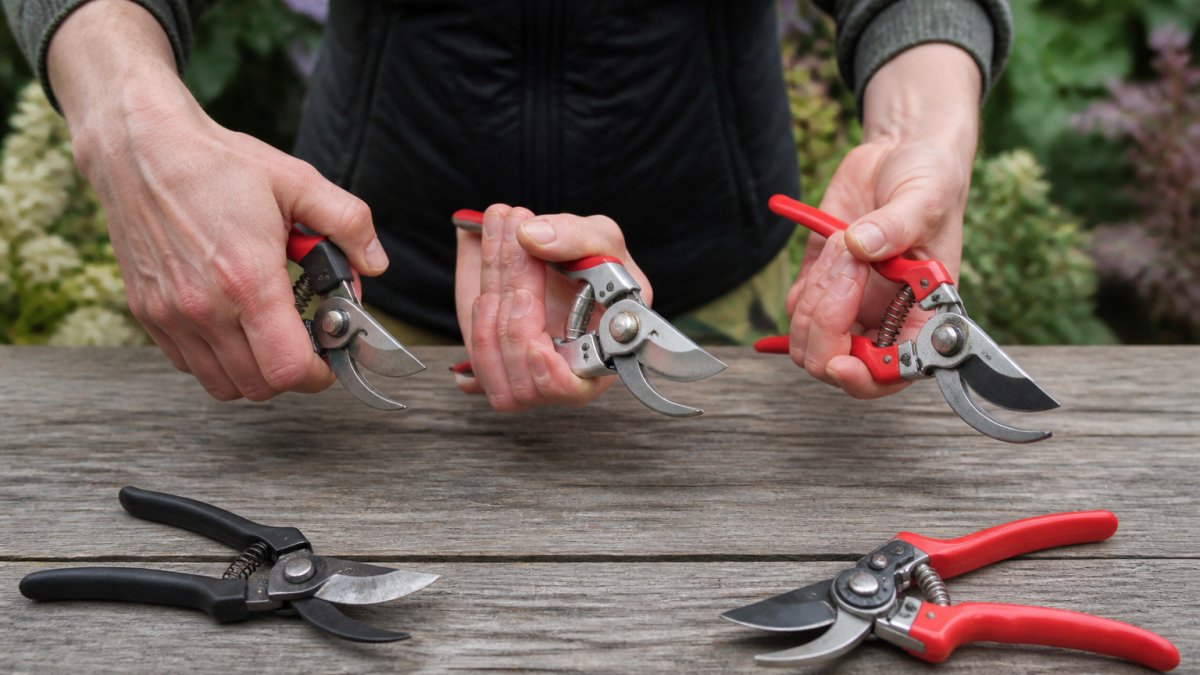
Hand size and grip strength considerations
Hand size matters more than most guides acknowledge. A secateur designed for medium hands can be awkward in small or large hands.
Small hands often benefit from shorter secateurs (205mm rather than 270mm), but shorter handles mean less mechanical advantage, so you need a tool that compensates with a compound action mechanism or very sharp blades.
Grip strength is the other variable. If your hands tire quickly, prioritise mechanical advantage (longer handle, compound action) over weight or compactness. A heavier tool that requires less effort beats a light tool that demands strong hands.
Compound action versus standard bypass
Compound action increases cutting force by roughly doubling the mechanical advantage.
The Saboten Compound Secateurs are designed specifically for people without strong grip strength. The compound mechanism means you cut with more force than your hand strength alone would allow.
Standard bypass secateurs require more hand strength but are simpler, lighter, and often more precise. If you have reasonable grip strength and do delicate work (floristry, orchids), bypass is probably better.
Secateurs Maintenance and Sharpening for Long-Term Comfort
A dull secateur is a fatiguing secateur. When blades lose sharpness, you apply more force to cut, so your hand works harder.
Professional secateurs need regular cleaning and occasional sharpening.
Toolpro supplies sharpeners and replacement parts for all the secateurs we stock, so you're not locked into buying new tools when wear happens.
The best maintenance habit is simple: clean the blades after use, sharpen every 2-4 weeks if using them daily, and check spring tension occasionally.
Leyat Swiss Professional Secateurs - Roto →
Our Top Picks: Detailed Review and Comparison
We've tested and stocked these secateurs because they genuinely reduce hand fatigue across different use cases. The choice depends on your hand size, grip strength, cutting volume, and the type of work you do.
Leyat Swiss Professional Secateurs - Roto
The rotating handle on the Leyat changes how your wrist feels after a full day of pruning. This Swiss-made tool is built for professional orchards and nurseries, and it shows in the tolerances and blade quality.
The Leyat is expensive at $110, but the rotating mechanism is where the fatigue reduction happens. If you're doing high-volume pruning and wrist strain is your main complaint, this tool directly addresses it.
Best for: High-volume pruning where wrist position matters, florists, nursery staff, vineyard workers doing extended sessions.
Pros:
- Rotating handle eliminates wrist-strain fatigue
- Swiss precision means blade alignment stays true
- 220mm length provides good use
- Durable construction for professional use
Cons:
- Higher price point than basic options
- Rotating mechanism adds complexity
- Not ideal for occasional pruning where the feature goes unused
Bahco Ergo Professional Secateurs
Bahco's Ergo range prioritises ergonomic handle design and comes in two sizes: Medium (205mm, $130) and Large (220mm, $135). The elastomer-coated handles are comfortable for extended use, and the carbon steel blades cut cleanly without excessive force.

The Medium size is the sweet spot for average to small hands: the 205mm length is manageable and the handle diameter is comfortable without being chunky. The Large works better for bigger hands or regular thick-branch cutting.
Best for: Professional users who want comfort without complexity, florists, gardeners, anyone doing daily pruning where hand comfort is the priority.
Pros:
- Excellent ergonomic handle design
- Carbon steel blades stay sharp
- Two sizes accommodate different hand sizes
- Reliable, proven design
Cons:
- Standard bypass requires reasonable grip strength
- Shorter handle (Medium) means less mechanical advantage
- No rotating feature for wrist relief
Felco 13 Secateurs
At 270mm long, the Felco 13 gives maximum mechanical advantage, meaning less hand effort per cut. The carbon steel blade is exceptionally sharp, and the aluminium handles are light without feeling cheap.
The longer length isn't for everyone; if you have small hands, it might feel awkward. But if you can work with the length, the mechanical advantage makes a real difference in fatigue reduction. The Felco 13 is built to last decades, with replacement parts readily available.
Best for: Professional users with average to large hands doing high-volume cutting where mechanical advantage matters most.
Pros:
- 270mm length maximises use and reduces hand effort
- Proven durability and reliability
- Sharp blade requires less force to cut
- Replacement parts widely available
- Excellent for thick-branch cutting
Cons:
- Length is awkward for small hands
- No ergonomic grip coating (bare metal handles)
- Higher price at $145
Saboten Compound Secateurs
The Saboten is the fatigue-buster for people with weak hands or arthritis. The compound action mechanism roughly doubles your hand strength, so you can cut branches impossible with a standard bypass. At $50, it's the most affordable option here.
The tradeoff is simplicity. Compound secateurs are slightly heavier and more complex mechanically. But for someone struggling with grip strength, this tool transforms what's possible.
Best for: People with weak hands, arthritis, or reduced grip strength. Also good for occasional pruning where you need reliable cutting without technique.
Pros:
- Compound action doubles cutting force
- Affordable at $50
- Works well for weak hands and thick branches
- Japanese precision in blade design
Cons:
- Simpler design means less durability than Swiss tools
- Slightly heavier than bypass-only secateurs
- Less suitable for delicate work like floristry
| Secateur Model | Price | Best For | Key Feature | Hand Size |
|---|---|---|---|---|
| Leyat Swiss Roto | $110 | High-volume, wrist relief | Rotating handle | Medium to large |
| Bahco Ergo Medium | $130 | Daily professional use | Ergonomic grip, comfort | Small to medium |
| Bahco Ergo Large | $135 | Daily professional use | Ergonomic grip, comfort | Medium to large |
| Felco 13 | $145 | Maximum use, thick branches | 270mm length, sharp blade | Medium to large |
| Saboten Compound | $50 | Weak hands, arthritis | Compound action, doubled force | Any size |
Conclusion: Investing in the Right Tool
Hand fatigue from pruning isn't something you have to accept. The right professional secateurs reduce strain, improve cut quality, and let you work longer without pain.
Toolpro specialises in sourcing professional-grade pruning tools designed to reduce fatigue and deliver precision. Our range includes the secateurs reviewed here, plus sharpeners and replacement parts to keep your tools working at full efficiency. Explore our full selection of professional secateurs and find the model that matches your hand size, grip strength, and cutting needs.
Frequently Asked Questions
What features in professional secateurs help reduce hand fatigue?
Ergonomic handle design, soft-grip coating, and spring action are the primary fatigue-reduction features. Rotating handles allow your wrist to stay in a neutral position during extended pruning, reducing strain. Lightweight construction and balanced blade geometry also minimise cutting effort. Bypass secateurs with sharp blades require less force than anvil-style cutters, making them ideal for all-day use.
Are roll-handle secateurs easier on the hands?
Yes. Roll-handle secateurs feature a rotating handle that reduces wrist strain during repetitive cutting motions. This design allows your hand to maintain a more natural position, which is particularly beneficial during extended pruning sessions. The Leyat Swiss Professional Secateurs - Roto ($110.00) is a professional-grade example that combines this feature with Swiss precision engineering.
Which secateurs are best for gardeners with weak hands?
Compound-action secateurs and models with ergonomic handles are ideal. The Saboten Compound Secateurs ($50.00) increase cutting force by 100%, reducing the hand strength needed for each cut. For weak hands, choose secateurs with elastomer-coated handles and shorter blade lengths (under 220mm), which provide better control and require less leverage.
How often should professional secateurs be sharpened or maintained?
Professional secateurs should be cleaned and lightly oiled after each use to prevent sap buildup and corrosion. Blade sharpening depends on use frequency; daily professional use typically requires sharpening every 2-4 weeks. Carbon steel blades hold their edge longer than softer materials. Toolpro supplies replacement parts and sharpeners to extend tool life and maintain cutting performance.
What is the difference between bypass and compound-action secateurs?
Bypass secateurs have two sharp blades that pass each other like scissors, producing clean, precise cuts ideal for professional florists and gardeners. Compound-action secateurs use mechanical advantage to multiply cutting force, making them better for users with limited hand strength or for cutting thicker branches. Choose bypass for delicate work and precision; choose compound for power and ease of cutting.