
Last Updated: November 24, 2026
Quick Summary
Cut and hold secateurs for florists grip the stem the moment the blade closes, so you can cut and carry with one hand instead of bending to pick up each dropped stem. Both models we stock are Swiss made: the Leyat at $110.00 and the Felco 100 at $152.00.
- The spring-loaded clamp sits in the counter blade and holds the stem until you open the handle.
- Position the stem deep in the jaw near the pivot for more leverage and a cleaner slice.
- Release stems over your carry arm, trolley or bucket, never over the soil.
- A blunt counter blade pinches rather than slices, causing bruising within hours.
- Keep a spare blade on hand so a dull edge does not stop your day.
Table of Contents
- What Are Cut and Hold Secateurs for Florists?
- How Do Cut and Hold Secateurs Work?
- Florist Secateurs Compared: Two Swiss-Made Options
- Cut and Hold Pruning Shears vs Bypass Secateurs for Flowers
- Bypass Secateurs for Flowers: What the Cutting Action Does to Stems
- Flower Stem Cutters: A Step-by-Step Harvesting Workflow
- Blade Hygiene, Sharpening and Maintenance
- Choosing Your Floristry Secateurs at Toolpro
- Frequently Asked Questions
What Are Cut and Hold Secateurs for Florists?
Cut and hold secateurs for florists are pruning tools with a spring-loaded jaw that grips the stem the moment the blade closes, so you can cut and carry with one hand. Standard secateurs drop every stem you cut, meaning you stop, bend, and pick up after each snip.
That difference sounds small until you are working through a bucket of roses. With a cutting blade and a counter blade that closes flat, the severed stem stays clamped in the jaws until you release the handle. Your other arm keeps collecting, or your trolley keeps filling.
A cut-and-hold bypass secateur uses the same scissor action as a standard bypass tool, but the counter blade carries a clamping surface rather than a plain flat jaw. The result is fewer movements per stem, less bending, and a tidier harvest.
How Do Cut and Hold Secateurs Work?
The holding mechanism is a spring-loaded clamp built into the counter blade. When you squeeze the handle, the cutting blade passes the counter blade and the stem is trapped between them. Release the handle and the spring eases the jaw open, dropping the stem wherever you point it.
Which stems suit it? Anything from a rose stem up to a branch you can comfortably fit between the jaws. Thin, flexible stems hold well. Very woody, thick branch material may need a heavier tool.
A common mistake is assuming the hold is permanent. It is not. The grip lasts until you open the handle, so you control where each stem lands.
Florist Secateurs Compared: Two Swiss-Made Options
Both products listed here are Swiss-made, cut-and-hold models sized for one-handed harvesting.
| Feature | Leyat Swiss Professional Secateurs - Cut & Hold | Felco 100 Cut and Hold Secateurs |
|---|---|---|
| Price | $110.00 | $152.00 |
| Length | 215mm | 210mm |
| Origin | Swiss made | Swiss made |
| Best for | Flower harvesting | Picking roses and other flowers |
| Key benefit | Highest-quality build, cut and hold | One-handed cutting, stems carried in the other arm or on a trolley |
Leyat Swiss Professional Secateurs - Cut & Hold
The Leyat is a straightforward, well-built cut-and-hold tool at the lower price of the two. It is 215mm long and is Swiss made.
Best for: florists harvesting mixed flower crops who want a quality cut-and-hold tool. Skip if: you specifically want the Felco name and parts ecosystem.
See the Leyat Swiss Professional Secateurs - Cut & Hold
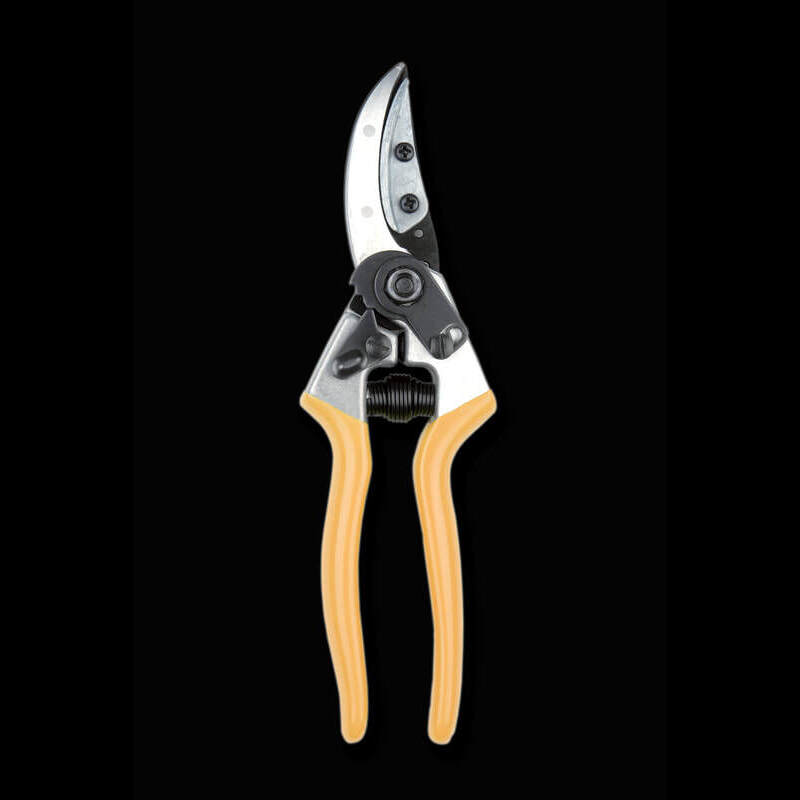
Felco 100 Cut and Hold Secateurs
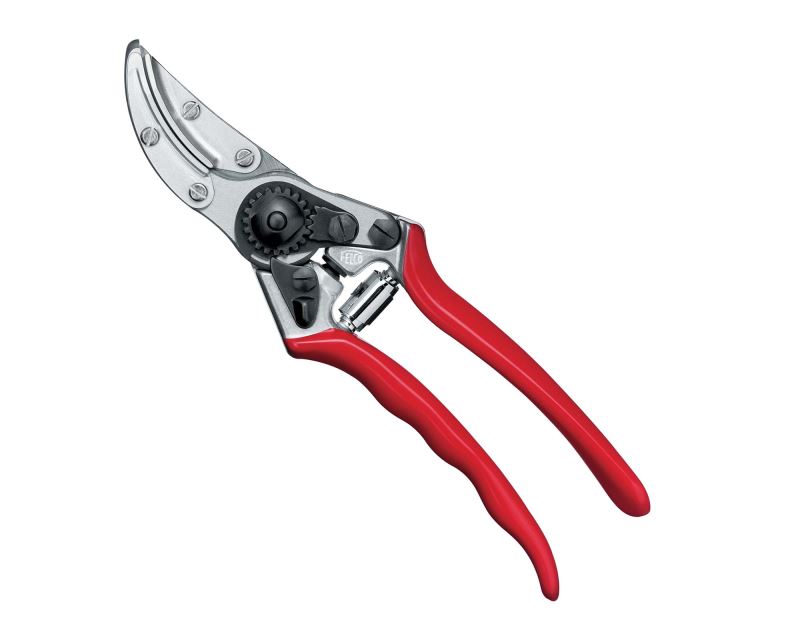
The Felco 100 is Swiss quality and is designed for picking roses or other flowers. It allows efficient one-handed cutting, so cut stems can be carried in the other arm or on a trolley. It is 210mm long.
Best for: rose growers and florists picking at volume. Skip if: budget is the deciding factor and the Leyat covers your cutting.
View the Felco 100 Cut and Hold Secateurs
Cut and Hold Pruning Shears vs Bypass Secateurs for Flowers
Cut-and-hold pruning shears suit harvesting into a bunch, while plain bypass secateurs suit pruning a plant when the offcut is left on the ground.
Think about what happens after the cut. Harvesting means the stem is the product, so you want it in your hand or your arm, not at your feet. Pruning means the stem is waste, so dropping it is fine and a lighter tool is easier on the wrist.
Florist scissors and snips sit in a third category, suited to trimming stems at the bench, though they are not built for woody rose stems or branch material.
Bypass Secateurs for Flowers: What the Cutting Action Does to Stems
Bypass action cuts like scissors, with one blade passing the other. We go deeper into that in our guide to why cut flower stems turn brown.
What separates a cut-and-hold bypass secateur from a standard bypass tool is the counter blade. On a standard tool the counter blade is a plain flat jaw that the cutting blade passes.
That dual action has limits worth knowing before you buy.
Stem size. The jaw opening sets the maximum stem diameter.
Stem shape. Round, firm stems hold well. Hollow stems, very soft herbaceous stems and thin flexible growth can slip out of the clamp before the blade finishes, especially if the blade is dull.
Bruising. The clamp is a pinch, and a pinch can leave a mark if it is too tight or held too long. On delicate blooms, release the stem promptly rather than carrying it clamped for minutes at a time.
Blade condition. A blunt or misaligned counter blade pinches rather than slices, and a pinched stem shows bruising within hours. The clamp makes this worse, because a dull blade plus a tight clamp is a bruise on both sides of the stem.
What most guides miss is that the hold mechanism also protects the cut. Because the stem is clamped immediately, it does not fall and knock against other blooms on the way down. Small thing, real difference on a delicate crop.
Flower Stem Cutters: A Step-by-Step Harvesting Workflow
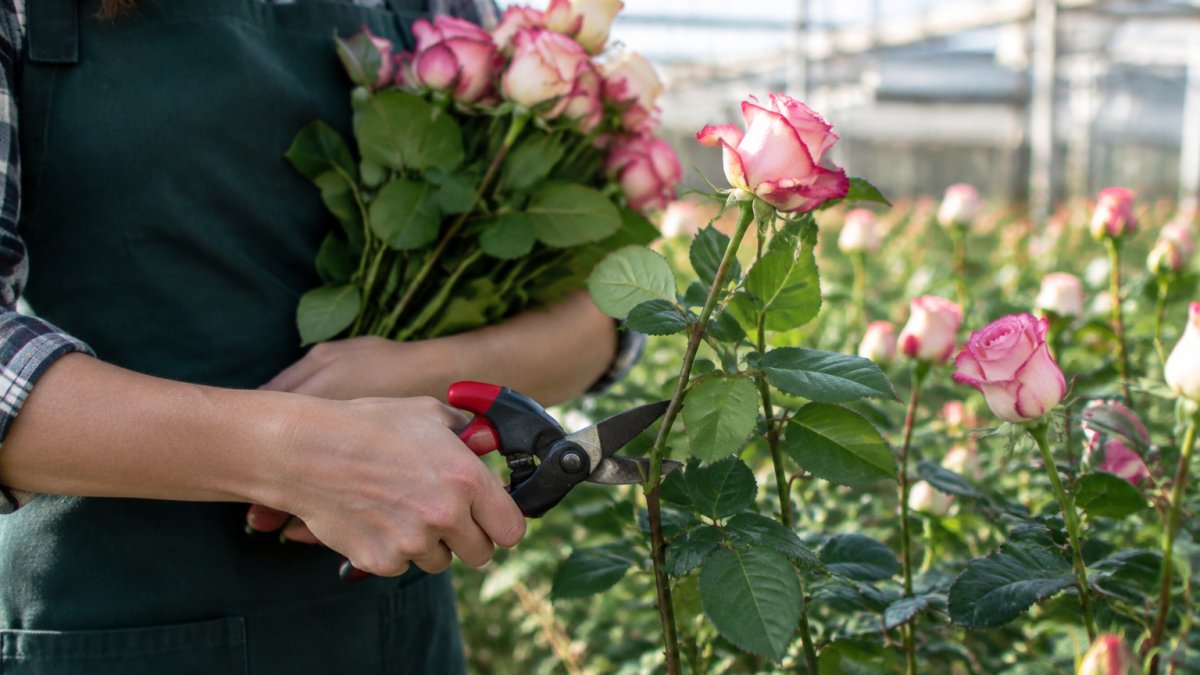
Most guides show you a list of steps. What they skip is the part that makes cut-and-hold secateurs different: the jaw is doing two jobs at once, and your technique has to account for both. Here is the sequence that works in a real picking run.
- Set up your carry arm or trolley before the first cut. The holding mechanism only saves time if the destination is already in place. Load your arm with a clean cloth or set your trolley at the end of the row, because once the jaw closes you are carrying a stem, not free to rearrange.
- Position the stem deep in the jaw, not at the tip. Slide the stem so it sits close to the pivot rather than near the blade tips. Cutting near the pivot gives more leverage and a cleaner slice on woody rose stems; cutting at the tips is where the jaw is most likely to slip or bruise.
- Cut at the angle you want the stem to sit in the vase. One cut, no second trim. A angled cut exposes more stem surface to water, and doing it in the field saves a bench step later.
- Keep the handle closed as you move to the next bloom. The spring holds the stem until you deliberately open the handle. Do not relax your grip between cuts unless you want the stem on the ground.
- Release over the collection point, not over the bed. Open the handle and the spring eases the jaw apart, dropping the stem where you point it. Aim for the crook of your arm, the trolley, or the bucket, not the soil.
- Work back through the bed in one pass. Fewer turns, fewer steps, less bending. The rhythm becomes cut, move, release, cut, rather than cut, bend, pick up.
- Move cut stems into clean water promptly. Stem handling after cutting affects vase life as much as the cut itself. A stem held in a warm arm for an hour before it reaches water loses more than one cut badly.
Watch out: if you twist the handle while the jaw is clamped, you can roll the stem against the counter blade and bruise the tissue you just cut cleanly. Keep the tool square to the stem through the whole cut and release.
The thing nobody tells you about cut-and-hold work is that the rhythm changes your posture. You stop bending after every stem, which is the point, but you also start carrying weight in one arm. Alternate arms through the row if you are picking at volume, and keep the trolley close enough that you are not reaching.
Blade Hygiene, Sharpening and Maintenance
Clean blades cut better and spread less between stems. Sap buildup on the cutting blade is the most common cause of a tool that starts tearing instead of slicing, and once a blade tears, the cut quality drops on every stem after it.
Wipe the blades down at the end of each session rather than rinsing and hoping. Sharpen on a regular schedule, not when the tool finally fails, and keep a spare blade on hand so a dull edge does not stop your day. A replacement Felco 100 blade is the practical way to keep that tool working.
Watch out: forcing a dull cut-and-hold secateur through a thick stem can spring the jaws out of alignment, and a misaligned clamp no longer holds anything reliably.
Choosing Your Floristry Secateurs at Toolpro
Tool selection comes down to three questions: what you cut, how much you cut, and whether the stem needs to stay in your hand. Answer those and the choice is straightforward.
We stock cut-and-hold models, standard secateurs, snips and spare parts because florists need all of them at different points in the week. If you are still weighing up the wider range, our guide to choosing secateurs for florists walks through the categories.
The real test of a florist's secateurs is what happens on the fifth bucket, not the first. If your hands are sore and your stems are scattered across the bench, the tool is working against you. Toolpro supplies Swiss-made cut-and-hold secateurs, replacement blades and sharpeners so your harvesting workflow holds up through a full day. Get started with Toolpro and cut, carry and collect in one motion.
Frequently Asked Questions
What are cut and hold secateurs used for in floristry?
They are used for harvesting and preparing flower stems where you need one hand free. The jaws grip the stem as the blade closes, so the cutting hand holds the stem while the other arm carries the blooms or guides them into a bucket. That suits rose picking, greenhouse work and any job where you walk a row cutting and collecting at the same time. For bench work such as trimming stems to length in a vase, a pair of florist secateurs or floral scissors is usually quicker.
How do cut and hold pruning shears differ from standard bypass secateurs?
Both use a bypass action, where a curved cutting blade passes a counter blade to slice rather than crush. The difference is the holding mechanism: on cut and hold pruning shears a flat jaw closes against the stem as you squeeze, so the tool keeps the cutting in its grip after the cut. Standard bypass secateurs release the stem the moment the blades part, which means it drops unless you catch it. If you cut and drop into a barrow, standard bypass is fine. If you cut and carry, the holding version saves a movement on every stem.
Can cut and hold secateurs be sharpened, and how often?
Yes. The cutting blade takes a fresh edge with a diamond file or sharpening stone, worked along the existing bevel at the same angle rather than across it. Sharpen when a stem starts to bruise or the blade slips instead of biting, which for daily florist work is often every few weeks. Keep the moving parts oiled and wipe sap off after each session, because dried sap stiffens the holding jaw and stops it gripping cleanly.
Are cut and hold secateurs suitable for cutting flower stems as well as woody branches?
They handle both, within limits. Soft and semi-woody flower stems, roses and small branches cut cleanly, and the holding jaw grips stems firmly enough to carry them. Very thick or dry hardwood is better left to loppers, since forcing a secateur beyond its capacity strains the blade and the spring. Match the tool to stem thickness: floristry secateurs for daily flower work, loppers for established branches. A clean cut with sharp blades also matters more for flowers, because a crushed stem takes up water poorly.
